Luxury Travel | September 7, 2026
India's railways are one of the great human spectacles on earth, and most travelers who want to experience them do so in one of two ways: the ordinary sleeper class, which is cheap and chaotic and unforgettable, or the established luxury trains, which are expensive and comfortable and a little bit sealed off from the country they cross. There is a third option, less known and harder to book, that sits between the two. A small number of private operators run restored heritage carriages, attached to regular trains or chartered on their own, and they offer a way to travel through Rajasthan that is intimate, slow, and genuinely connected to the places it passes through.
The carriages themselves are the draw. Most date from the early twentieth century, when they were built for princely states and senior colonial officials. They have been restored with teak paneling, brass fittings, and upholstered berths that convert to beds at night. Some have private bathrooms and small sitting rooms. Others are simpler, with shared washrooms and open windows that let in the dust and the sound of the country. What they share is a scale that feels human. There are no corridors full of strangers, no announcements over a loudspeaker. You travel with a handful of other people, a cook, and a couple of attendants, and the rhythm of the day is set by the train.
What the Route Actually Looks Like
A typical journey runs between Delhi and Jodhpur, or Jodhpur and Udaipur, with stops at places that are difficult to reach by road. You might wake up outside a small town and step off onto a platform where a car is waiting to take you to a fort or a stepwell that sees few visitors. You might spend an afternoon in a village where the local weavers still work on handlooms. The itinerary is flexible, and the operators who run these carriages tend to know the region well enough to adjust on the day.
The food is a highlight. Meals are cooked on board, using ingredients bought at markets along the way, and they tend to be regional and seasonal rather than the generic hotel fare that luxury trains often serve. Breakfast might be poha and chai. Lunch could be a Rajasthani thali with several small dishes. Dinner is often served under the stars, with the train stationary and the doors open. It is not fine dining in the European sense, but it is honest and good.
Booking and Expectations
These journeys are not easy to book from outside India. Most operators work through a small number of specialist agents, and departures are limited. The cost is high by Indian standards but lower than the well-known luxury trains, and the experience is more personal. You will not find a spa or a gym. You will find a comfortable bed, a hot shower when the water supply cooperates, and a view that changes constantly.
The right traveler for this is someone who values slowness and does not need to be entertained. The train moves at a pace that makes the landscape legible. You see the fields, the villages, the people working, the animals. You hear the sounds of the country rather than observing them from behind glass. At night, with the windows open and the train moving, the air smells of dust and woodsmoke and something green that is difficult to name.
It is not for everyone. If you need reliable Wi-Fi, consistent air conditioning, and a schedule that never slips, you will be frustrated. But if you are willing to accept a certain amount of uncertainty in exchange for a way of seeing Rajasthan that has largely disappeared, the private rail car is one of the last genuine travel experiences left in India. It is slow, it is old, and it is worth it.


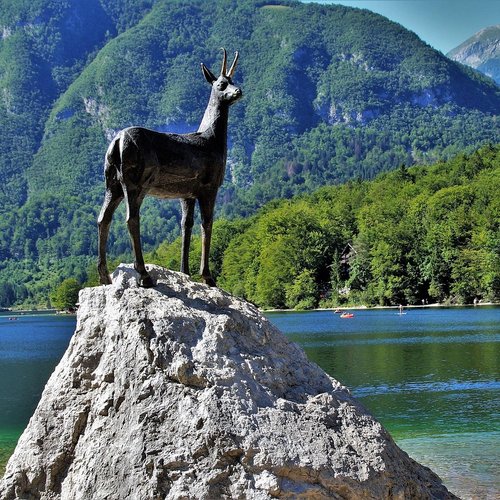























Slovenia's Julian Alps offer emerald rivers, quiet villages, and a level of alpine beauty that rivals Switzerland at a fraction of the cost.
Alice Rose
Sep 24, 2026 at 3:12 pm